← Back to Briefs
Loading dispatch…
Here’s what’s happening in geopolitics today. The geopolitical temperature is staying firmly in the red today, with Russia launching another massive overnight strike on Kyiv while Washington sends military aircraft over Caracas in a move that’s raising eyebrows across Latin America.
At the same time, Serbia is facing some of its largest anti-government protests in years, the White House briefly entered lockdown after a deadly shooting outside the complex, and Pakistan is once again confronting a deadly separatist insurgency after a devastating train bombing in Balochistan.
In today’s deep dive, we analyse where all three major players in the third Gulf War stand, with Israel increasingly sidelined out of major negotiations in the region.
Russia launched one of its heaviest overnight assaults on Kyiv in recent months, firing waves of missiles and drones at the Ukrainian capital, with Ukrainian authorities warning that an Oreshnik intermediate-range ballistic missile (IRBM) may have been involved in the attack. Ukrainian officials said at least one person was killed and more than 20 injured as residential buildings, schools and infrastructure across multiple districts were damaged, while air defence systems worked throughout the night to intercept incoming strikes.
The United States conducted a military “rapid response” drill over Caracas on Saturday, with two U.S. Marine Corps MV-22 Osprey aircraft flying low over the Venezuelan capital before landing at the recently reopened U.S. Embassy compound. The exercise, described by American officials as an emergency evacuation and readiness drill, also involved U.S. Marines and senior Southern Command officials, while Venezuelan authorities said the operation had been authorised in advance for potential “medical or catastrophic emergencies.” The highly symbolic drill comes just months after Washington restored diplomatic relations with Caracas following the removal of Nicolás Maduro.
Police clashed with anti-government protesters in central Belgrade after tens of thousands of people gathered to demand the resignation of Serbian President Aleksandar Vučić and the calling of early elections. Riot police fired tear gas and stun grenades as confrontations broke out near government buildings, with authorities reporting multiple arrests and injuries following some of the largest demonstrations Serbia has seen in years. The protests were reignited by long-running anger over alleged corruption and government mismanagement following the deadly Novi Sad railway station collapse, which has become a rallying point for a broader opposition movement.
A suspected gunman was killed after opening fire near a U.S. Secret Service checkpoint outside the White House on Saturday evening, triggering a temporary lockdown of the presidential complex while Donald Trump was inside the building. U.S. authorities said the suspect approached the checkpoint near 17th Street and Pennsylvania Avenue before pulling a weapon from a bag and firing at officers, who returned fire and fatally wounded him, while a bystander was also injured during the exchange.
At least 24 people were killed and dozens more injured after a bomb blast struck a train carrying Pakistani security personnel and their families near the city of Quetta in southwestern Balochistan province. The separatist militant group Baloch Liberation Army (BLA) claimed responsibility for the attack, which derailed multiple train carriages and caused extensive damage near the railway line as rescue operations continued overnight. Pakistani Prime Minister Shehbaz Sharif condemned the bombing and vowed further action against militant groups operating in the volatile province.
Iran-USA-Israel
Trump posted on Truth Social on Saturday that an agreement to end the war and reopen the Strait of Hormuz has been "largely negotiated," with "final aspects and details" still being discussed and a formal announcement coming "shortly." He also said he had spoken with leaders across the region, including Saudi Arabia, the UAE, Qatar, Pakistan, Turkey, Egypt, Jordan, and Bahrain, as well as a call with Netanyahu that he described as going well.
Rubio, speaking from New Delhi, was cautiously positive but not definitive. He said it was possible the world would get some "good news" in the coming hours, while adding there was "still work to do." He cited "significant progress" and reiterated the US position that Iran must never obtain a nuclear weapon, also flagging that any Iranian move to impose tolls on Strait traffic would set a dangerous precedent.
The deal is expected to unfold in two phases. In the first, Iran reopens the Strait to pre-war shipping levels and provides assurances it won't pursue nuclear weapons, with Iran also allowed to resume oil and fuel sales. The second phase, lasting 30 to 60 days, would address longer-term issues. The New York Times separately reported that Iran has agreed in a general statement to give up its stockpile of highly enriched uranium, with the exact mechanics to be worked out during follow-on negotiations.
This is the key tension right now. Iran's semi-official Fars news agency, which is affiliated with the IRGC, rejected Trump's framing on the Strait, saying his claim about it returning to pre-war status is "not true" and "inconsistent with reality." Fars specified that while Iran has agreed to allow vessel numbers to return to pre-war levels, this does not mean free passage as it existed before the conflict. Iran's Foreign Ministry spokesman offered a more measured but still open-ended read, saying both sides are in the "final stage" of an MOU and that positions are getting closer.
What's still unresolved is the framing of Strait control and the nuclear file sequencing. Iran has not yet accepted any specific actions on its nuclear programme, with the potential agreement reportedly allocating 30 days for Strait-related procedures and 60 days for nuclear talks. Globally we’re seeing world leaders more optimistic than in previous peace “leaks”, Pakistan's foreign minister has called the progress grounds for optimism. A formal announcement has not yet come, and Iran's window to formally respond appears to be the next 48 to 72 hours.
Don’t forget that Trump allegedly missed his own son's wedding to ensure he was present at these negotiations. Before the news of the MOU came out and Trump saying he was going to skip the wedding - many believed there were two possibilities – either war is resuming or war is ending, and it seems to be the latter. Yet, we all know how this game of diplomatic hot potato has been going.
According to the NYT, Trump is increasingly sidelining the Israeli President largely due to the events that unfolded publicly and privately since the Iran conflict broke out. Netanyahu was reportedly furious over the deal being closed and while that may ultimately prove to be “fake news”, Israel remains the elephant in the room. Any agreement between the U.S. and Iran would not solve the core issue: Israel and Iran are not just regional rivals, but long-term ideological and geopolitical enemies whose conflict extends far beyond any single nuclear or diplomatic deal. Especially one where Israel doesn’t have a seat at the table (unless you include Kushner).


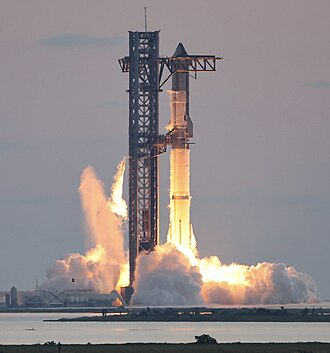
TODAY IN HISTORY (May 24, 1951): In the U.S. nuclear program, the fourth test of Operation Greenhouse was conducted, resulting in the first proof-of-principle test of a booster design in nuclear fission.

According to most reports, the Houthi's have made key headway on the southern front with the strategic capture of the strategic city of Mokha.
August was a slow month on paper, but Russian reconnaissance units have being making key advances on the most politically important sectors of this war.
Today’s conflict tracker takes us to Yemen as the information on the ground is murky, but we’ve covered the last 24 hours as the Saudi’s look to expand their role in the conflict.