← Back to Briefs
Loading dispatch…
Here’s what’s happening in geopolitics today. A shooting in Washington continues to reverberate, with investigators uncovering the suspect’s political motives, as global leaders react and reach out to Donald Trump.
At the same time, diplomacy is in full swing, with Iran in talks with Russia and Palestinian politics seeing a shift after local elections. Meanwhile, pressure is building in the UK, where Keir Starmer faces a potential parliamentary probe over a controversial appointment.
In today’s deep dive, we put the spotlight on the Sahel region as the JNIM-FLA offensive has shocked the Malian government to its core.
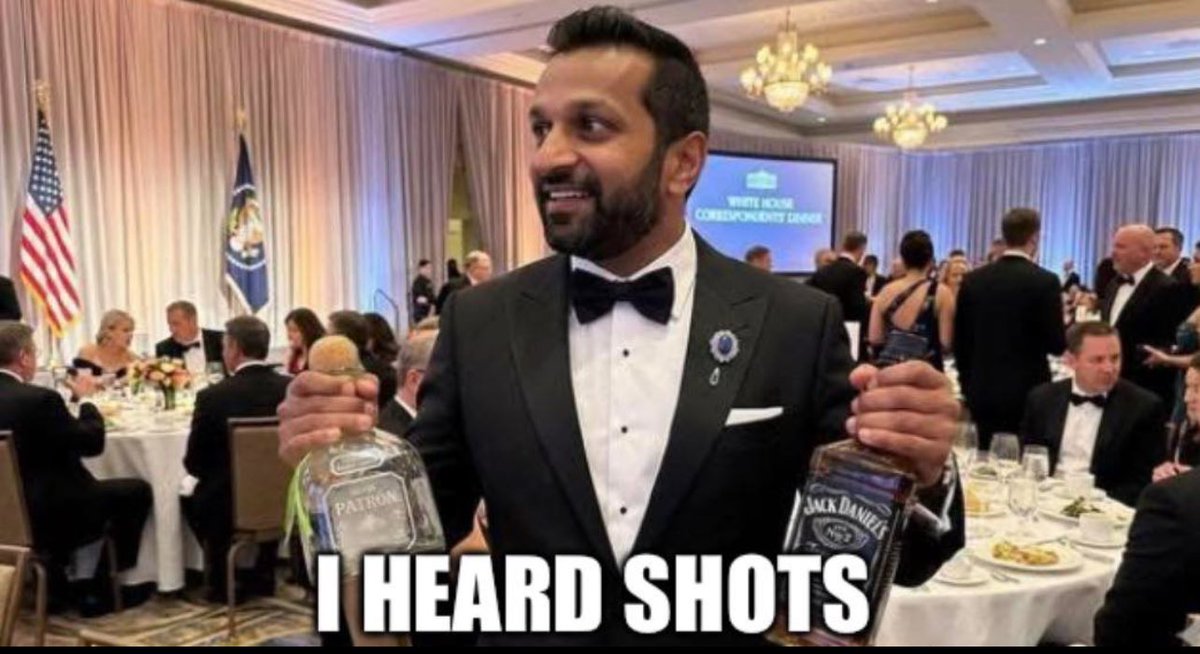
Investigators say the suspect in the Washington gala shooting sent writings to family members shortly before the attack, outlining grievances against Trump and his administration. Authorities believe the messages, which included political criticism and references to targeting officials, are central to establishing motive, with the incident being treated as a politically driven attack. The suspect was arrested at the scene after opening fire near a security checkpoint, and now faces multiple federal charges as investigators continue examining his background and communications.
Iran’s Foreign Minister Abbas Araghchi has arrived in Saint Petersburg for talks with Russian President Vladimir Putin, as part of an ongoing diplomatic tour. The meeting is expected to focus on the ongoing conflict involving Iran, as well as stalled negotiations with the United States following the collapse of recent talks.
Turkish President Recep Tayyip Erdoğan held a phone call with Donald Trump following the shooting incident at the White House Correspondents’ Dinner in Washington. During the call, Erdoğan condemned the attack as a “heinous act against democracy and press freedom” and expressed relief that Trump and other attendees were unharmed. He also conveyed his well wishes and support.
Loyalists of Palestinian President Mahmoud Abbas have won the majority of seats in recent municipal elections across the West Bank, with additional gains in parts of the Gaza Strip. The vote marked the first election of any kind in Gaza since 2006, with polling held in the city of Deir al-Balah despite ongoing conflict and logistical challenges. Turnout was relatively low, and Hamas did not formally participate, though some locally aligned candidates secured a small number of seats, while Fatah-backed lists dominated overall.
UK Prime Minister Keir Starmer is facing a parliamentary vote on whether to launch a formal probe into his handling of Peter Mandelson’s appointment as ambassador to Washington. The proposed inquiry would examine whether Starmer misled Parliament by claiming proper procedures were followed, despite reports that security vetting concerns had been raised and potentially overridden. While opposition parties are pushing for the investigation, Starmer’s government has dismissed the move as politically motivated, with the outcome of the vote likely to hinge on Labour’s parliamentary majority.
The most consequential development is Kidal. The city has fallen to the FLA and JNIM, marking the first time either group has taken military control of a city since 2013. This is strategically significant beyond the symbolism. Controlling urban centres gives the alliance access to fuel, food, supplies and the ability to tax movement, which feeds directly into sustaining a prolonged campaign. The Africa Corps, having negotiated a safe withdrawal corridor for its own personnel, is now pulling back toward Tessalit. Critically, that deal does not cover Malian Armed Forces soldiers left behind in the former UN camp outside Kidal. Those men are surrounded, and Bamako's government is now watching its Russian partners walk away from their own troops to save themselves. That is not a small political problem.
On the human cost at the top, the hits have been severe. Mali's Defence Minister Sadio Camara was killed in a vehicle-borne IED attack on his residence. Reports from the ground indicate his wife and at least one of his children also perished. The Malian Chief of the General Staff was also killed. Junta leader Goïta is reportedly sheltering in a camp under Special Forces protection, which tells you everything about the psychological atmosphere in Bamako right now.
Russian forces have not been untouched either. A Russian helicopter was shot down over Mali, crew killed, almost certainly by FLA fighters.
What stabilised the situation, at least partially, was drone power. Turkish and Russian drone strikes helped FAMA and Africa Corps forces hold onto the key airbases in Gao, Sévaré, Kati and Bamako. Those airbases matter enormously for any counteroffensive capacity and resupply. The honest read here is that the junta has survived day one, but with its most senior military and civilian leadership gutted, its Russian partners in partial retreat, and an enemy that has now demonstrated it can coordinate simultaneous attacks across the entire country. The worst of this is likely still ahead.
TODAY IN HISTORY (April 27, 1810): Beethoven writes the world's most recognizable piano composition
On this day in 1810, Ludwig van Beethoven shared his feelings in a beautiful piano piece called Für Elise. But it wasn't known to the world until 1867, decades after he died, when a scholar found it. And we still don't know who, exactly, the Elise in Beethoven's dedication was—or whether there actually was an Elise.

The Sudanese Armed Forces have cracked open RSF defensive positions and opened the key Khartoum-El Obeid road.
Tonight we zoom in to provide an analysis and summary of the last few days in Manilla, as Ukraine and Russia largely took the spotlight.
Reports are coming out that Russian forces have been encircled north of Lyman - the question is, is that true?